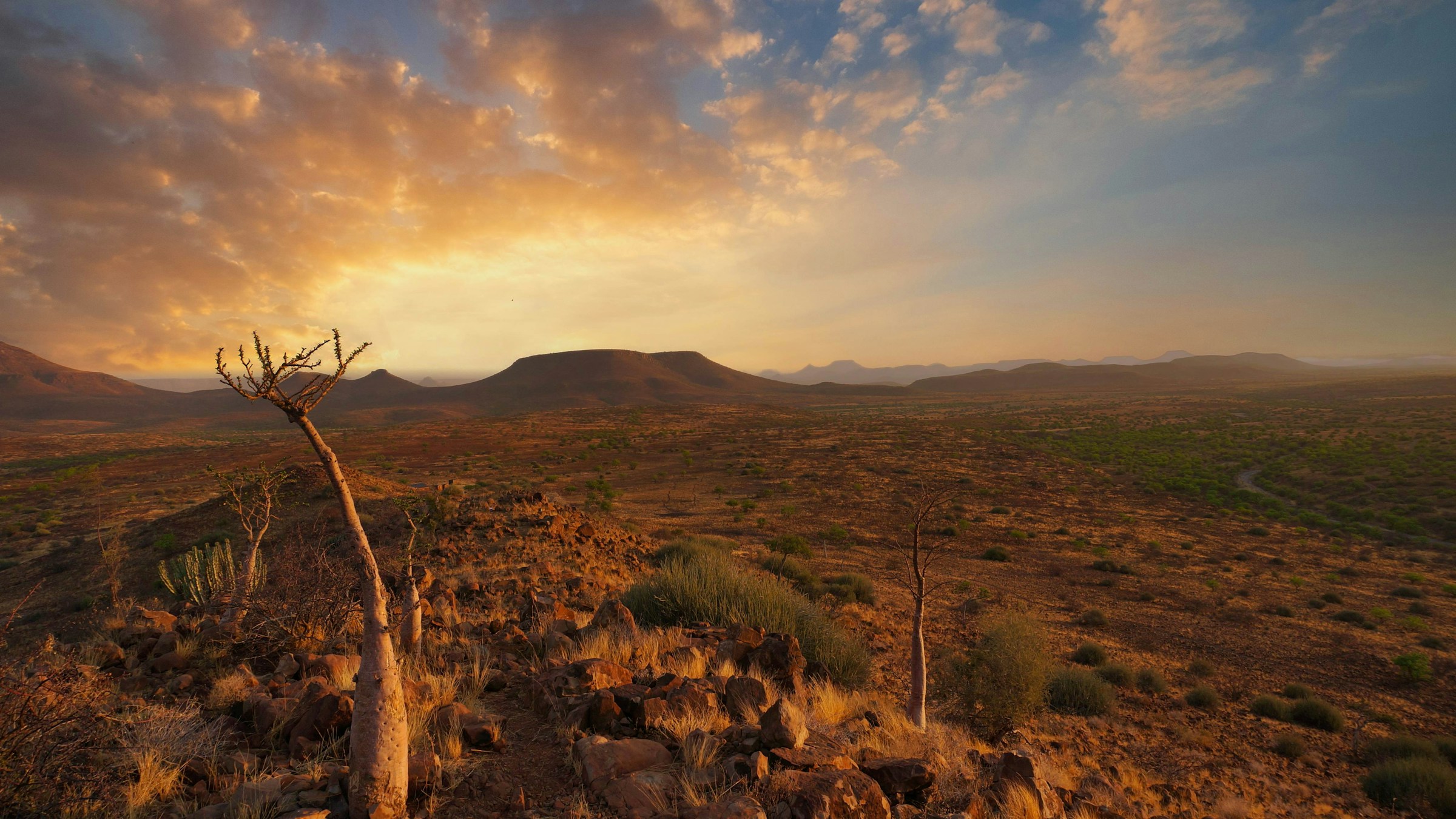
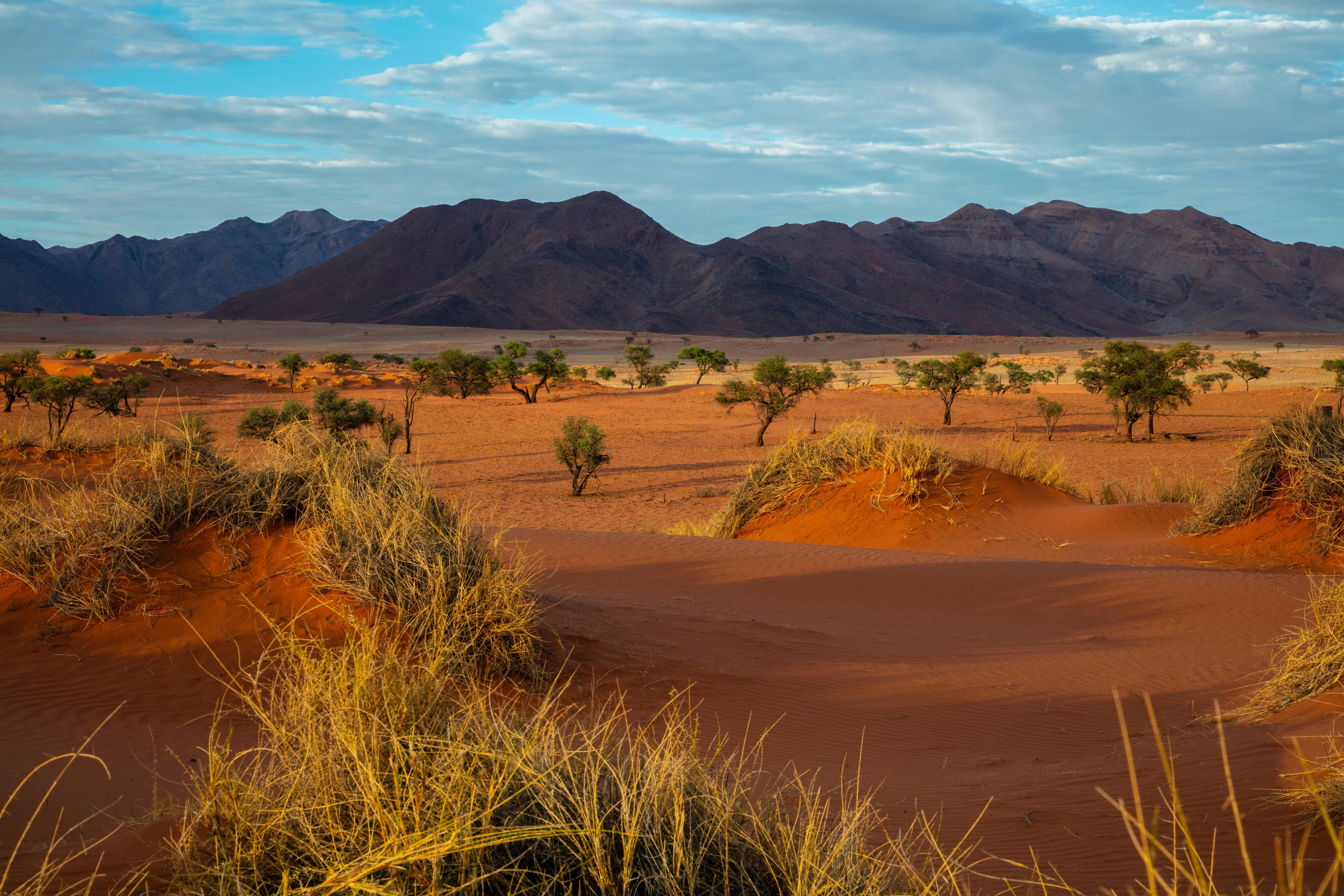
Namibia is an exceptional destination in Southern Africa, renowned for the vastness of its landscapes, the purity of its horizons, and the richness of its wildlife. A large and sparsely populated country, it offers a rare feeling of freedom and escape, where nature still reigns supreme. From the monumental dunes of the Namib Desert to the open savannahs of the north, and through greener regions crossed by major rivers, the diversity of scenery makes Namibia a fascinating destination to explore on a tailor-made journey.
Traveling in Namibia means immersing yourself in a contrasting and spectacular environment, ideal for both adventure and contemplation. Whether you are planning a safari based on a self-drive itinerary with camping stops or a route combining charming lodges and authentic experiences, Namibia lends itself perfectly to a personalized trip, designed according to your desires and pace.
Discover : Namibian Regions, our Trips in Namibia and our Accomodation map
Namibia’s varied geographic and geological territories offer regions that are truly distinct from one another:
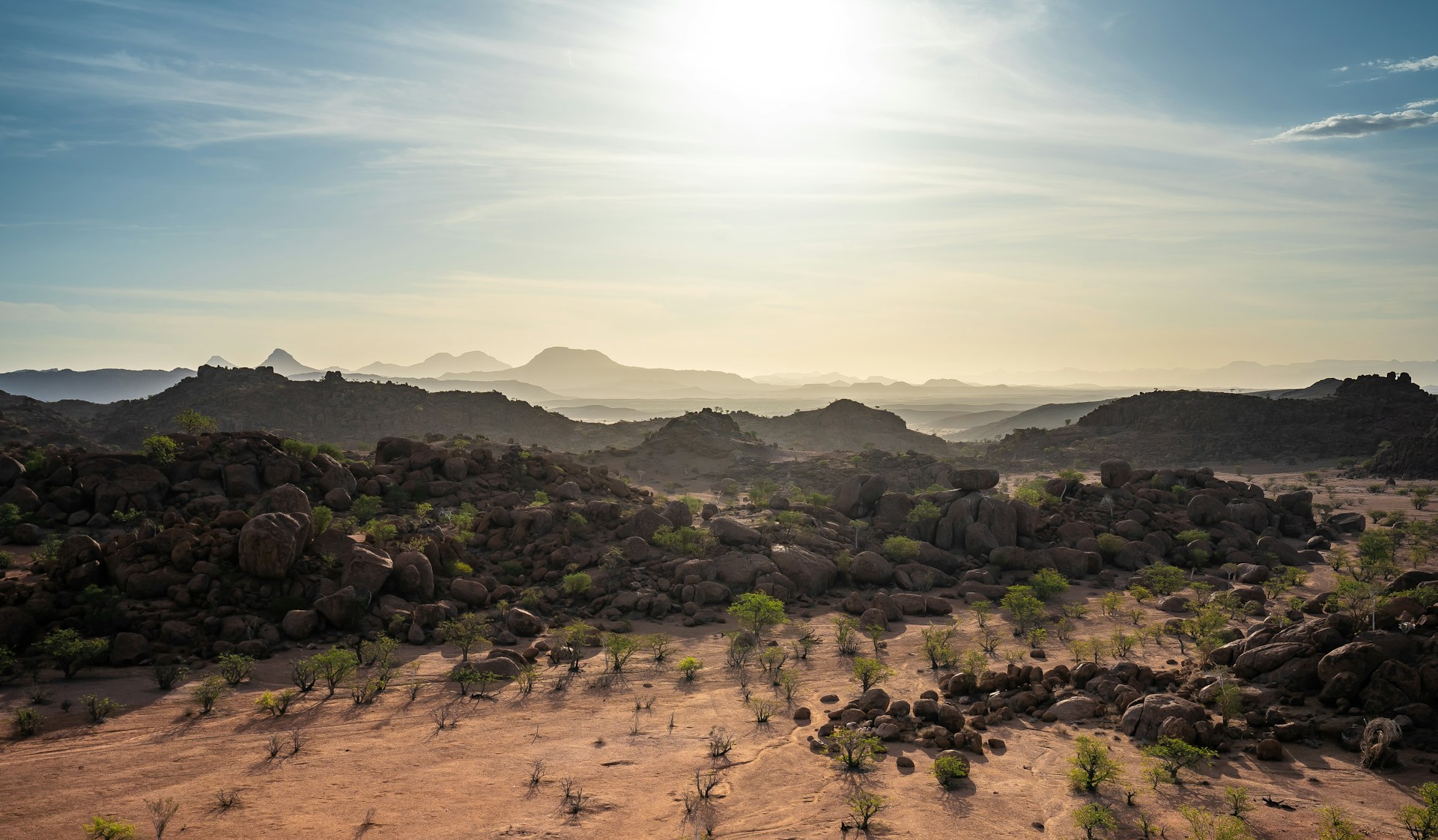
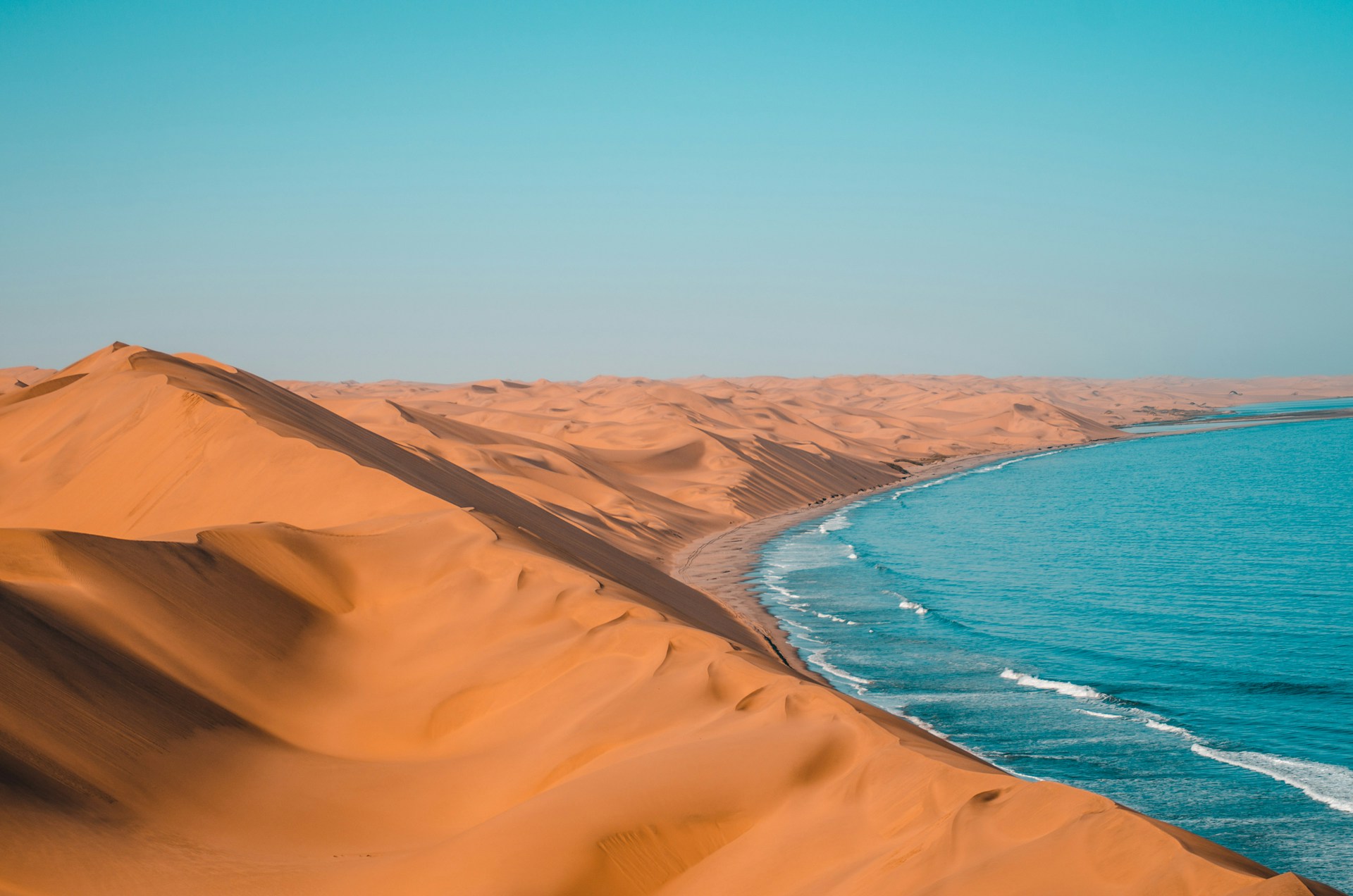
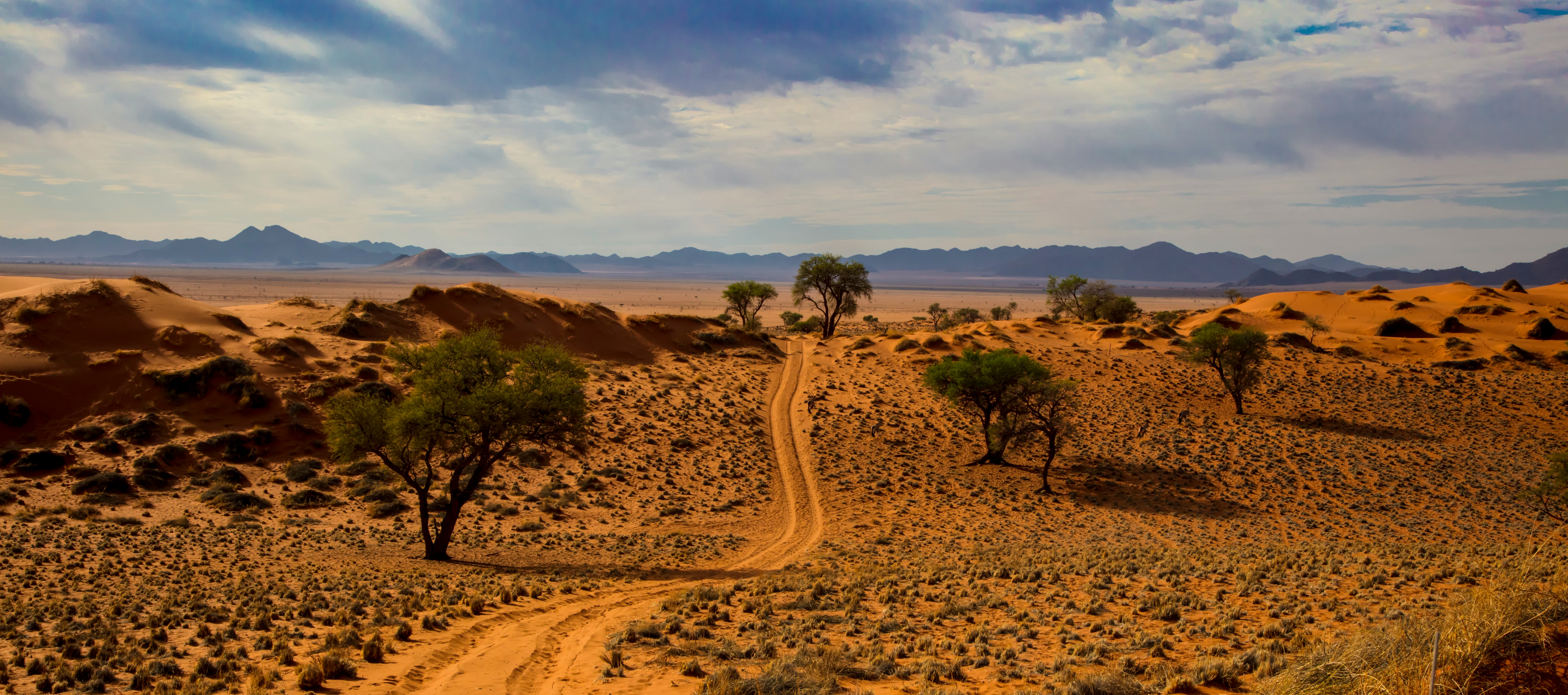
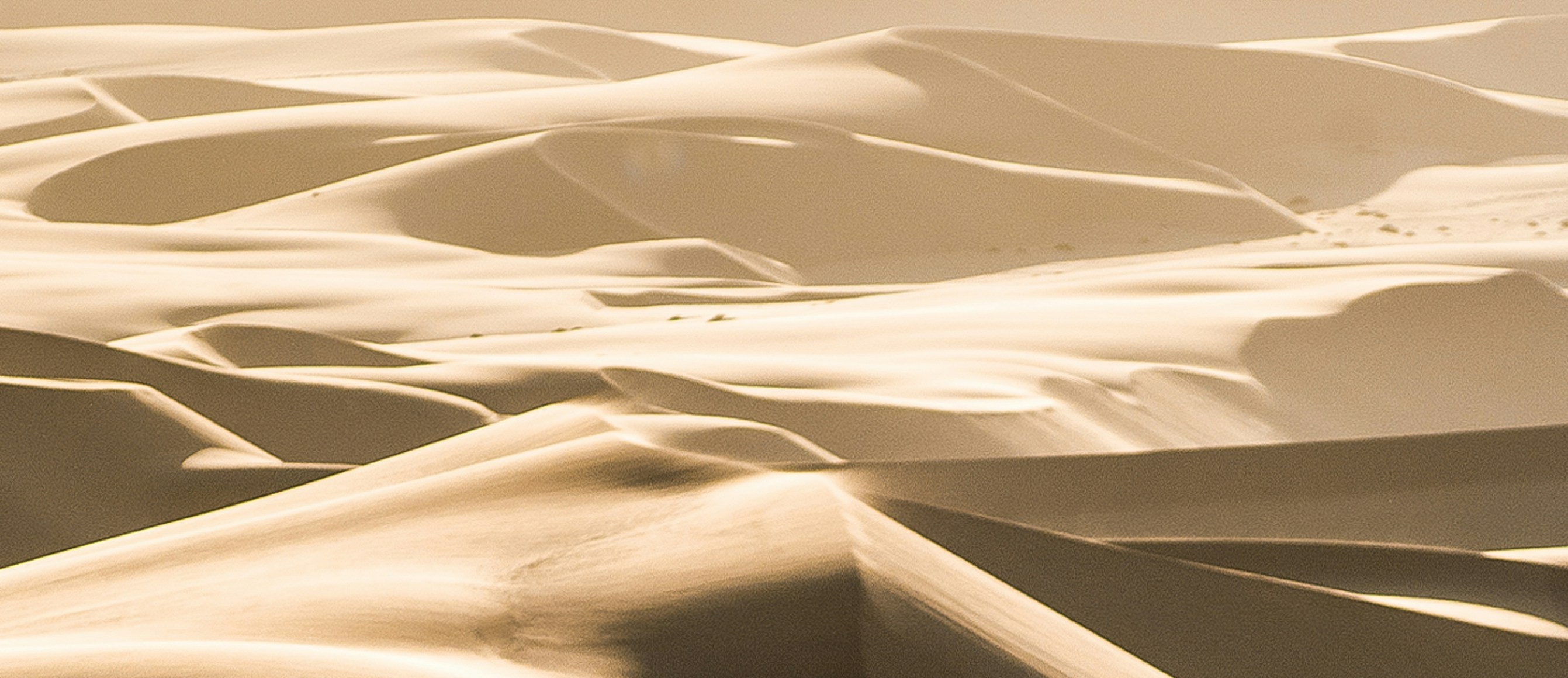
To the west, the Namib Desert borders the Atlantic Ocean and is one of the country’s most iconic landscapes. Considered the oldest desert in the world, it is characterized by monumental sand dunes shaped by wind and light.
To the east, the Kalahari Desert stretches far beyond Namibia, reaching into Botswana and South Africa. These two great deserts cover nearly two?thirds of the territory, separated by a central plateau rising to 2,579 meters above sea level, the backbone of the country.
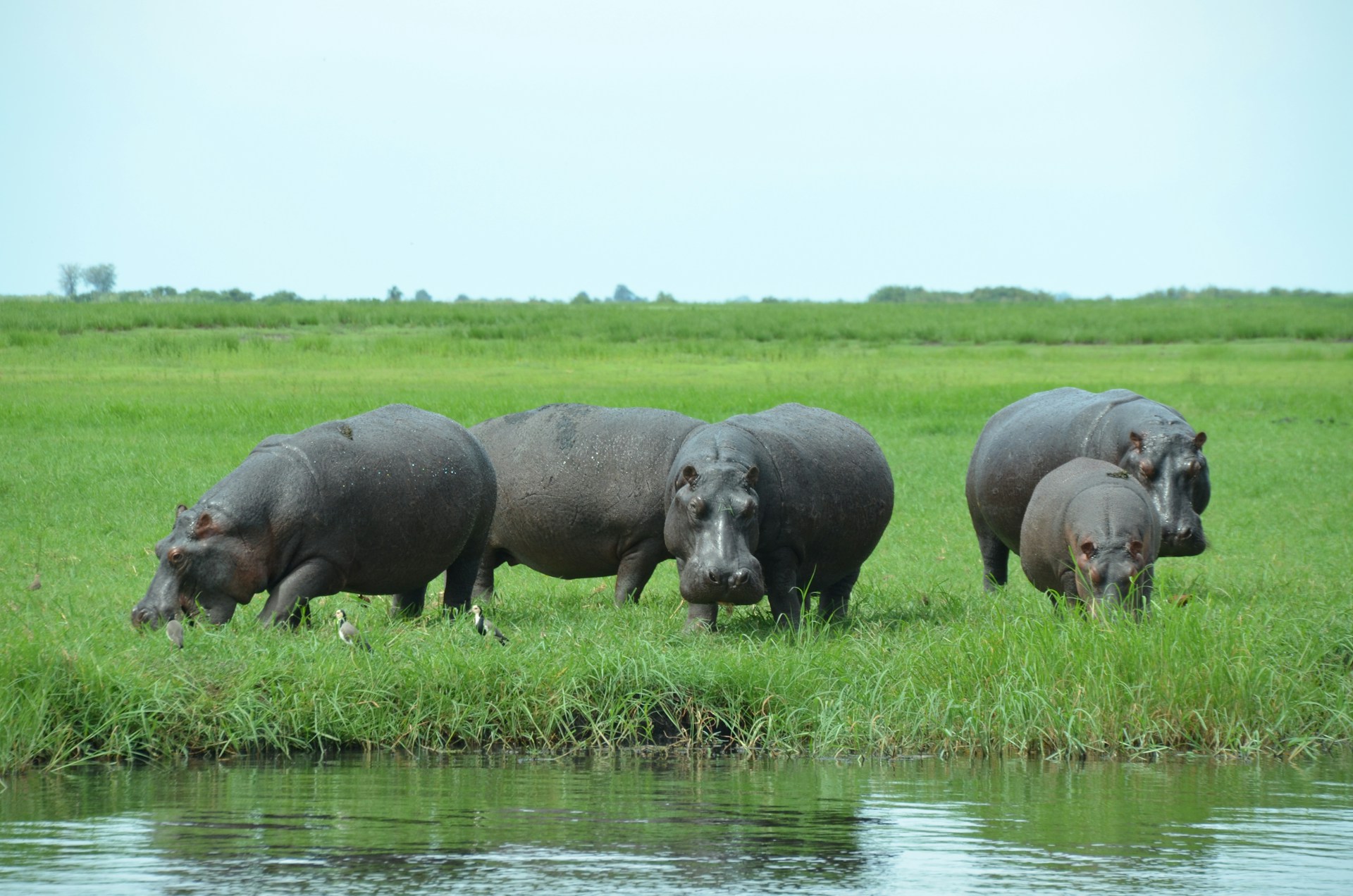
In the northeast, the Caprivi Strip and Kavango regions contrast sharply with the rest of Namibia. Traversed by large rivers, these verdant and wooded territories reveal a more tropical atmosphere and attract abundant wildlife drawn to the presence of water.
The diversity of Namibia’s landscapes gives travelers access to a wide range of nature?based experiences:
Off?road safaris offer magnificent wildlife?watching opportunities.
Light aircraft flights or hot?air balloon rides reveal the immensity of the Namib Desert from a spectacular aerial perspective.
Hiking, trekking, and horseback explorations allow for a more intimate immersion in these vast spaces.
In the riverine regions of the north, gentler water?based explorations offer a different kind of discovery.
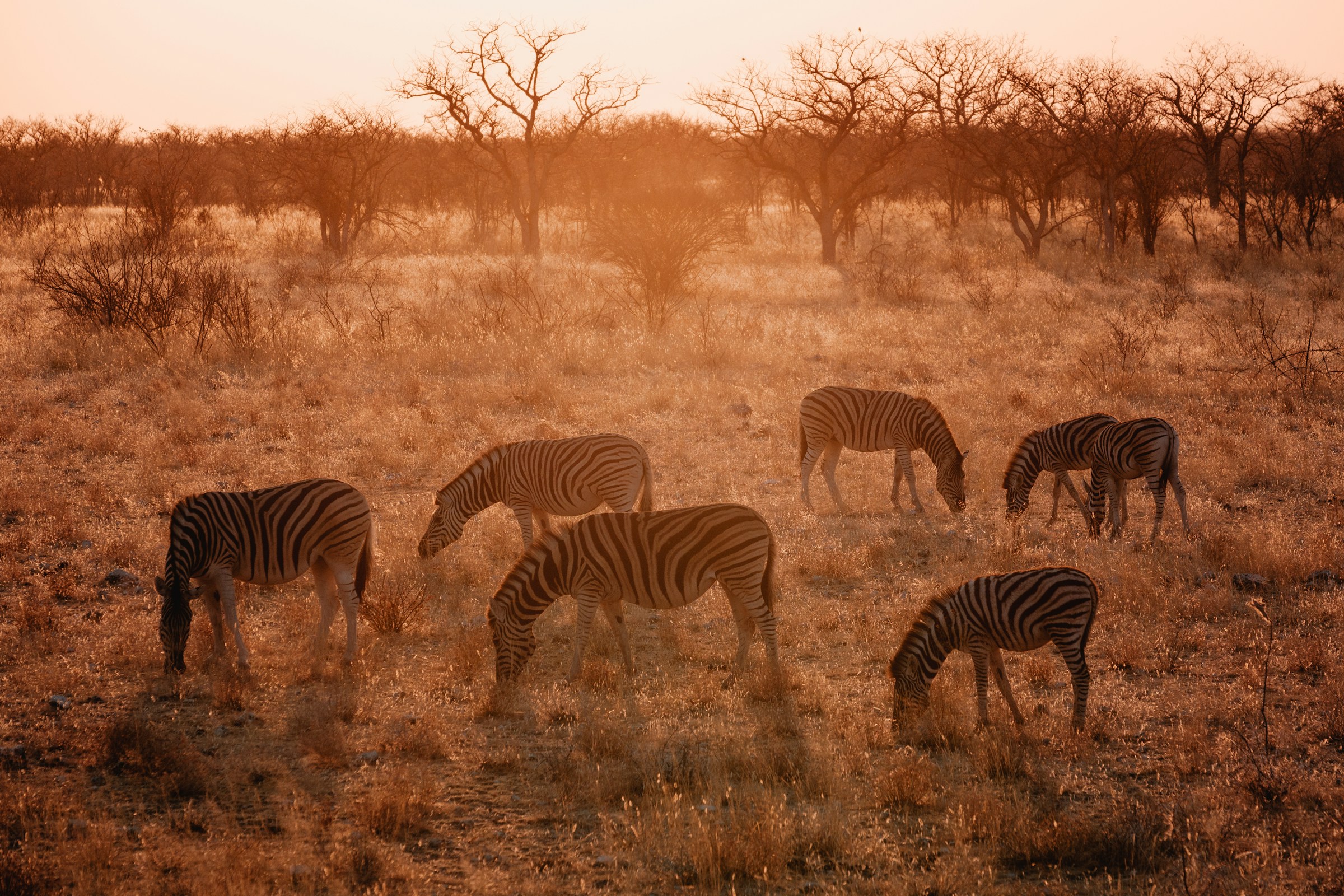
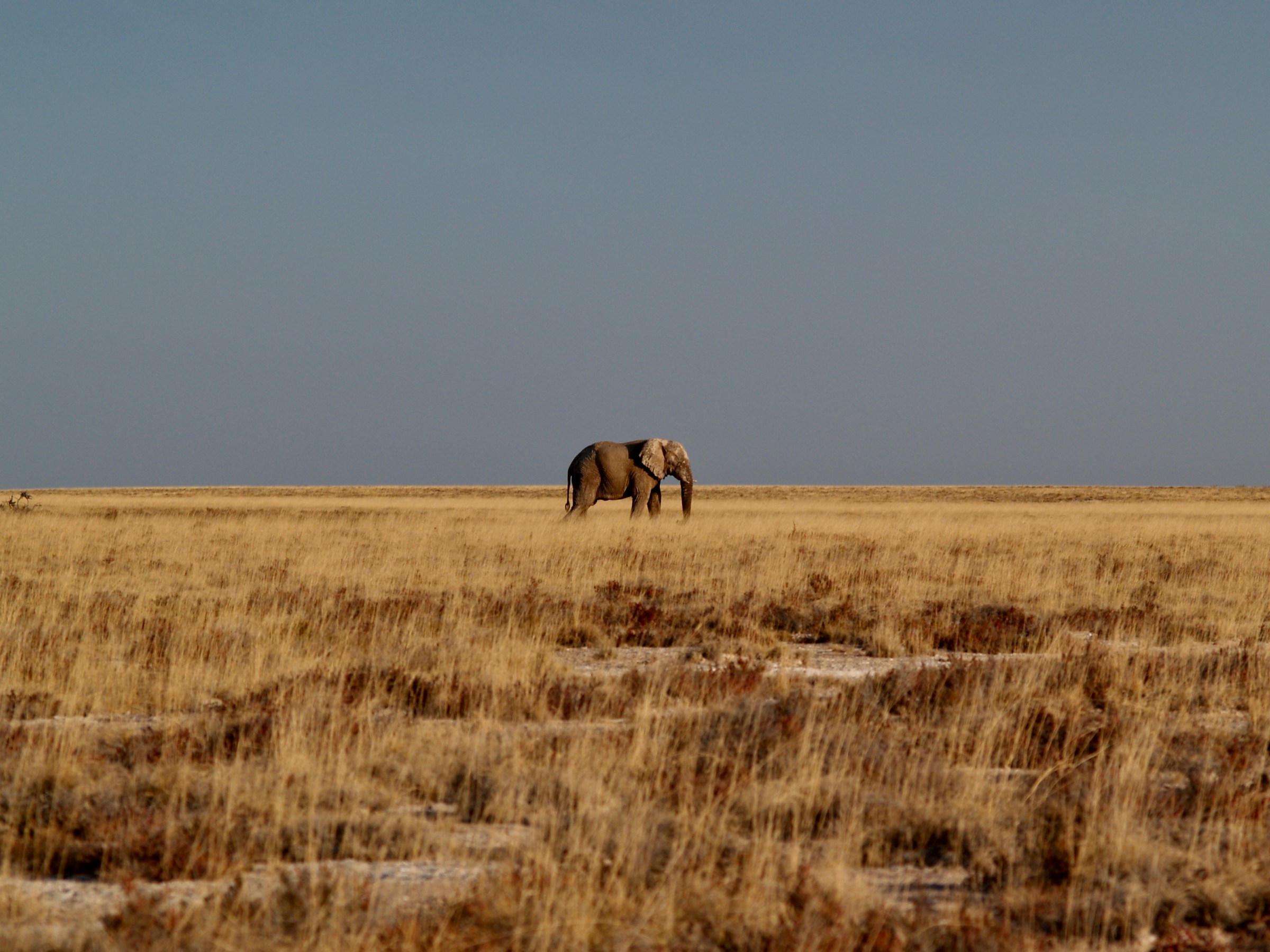
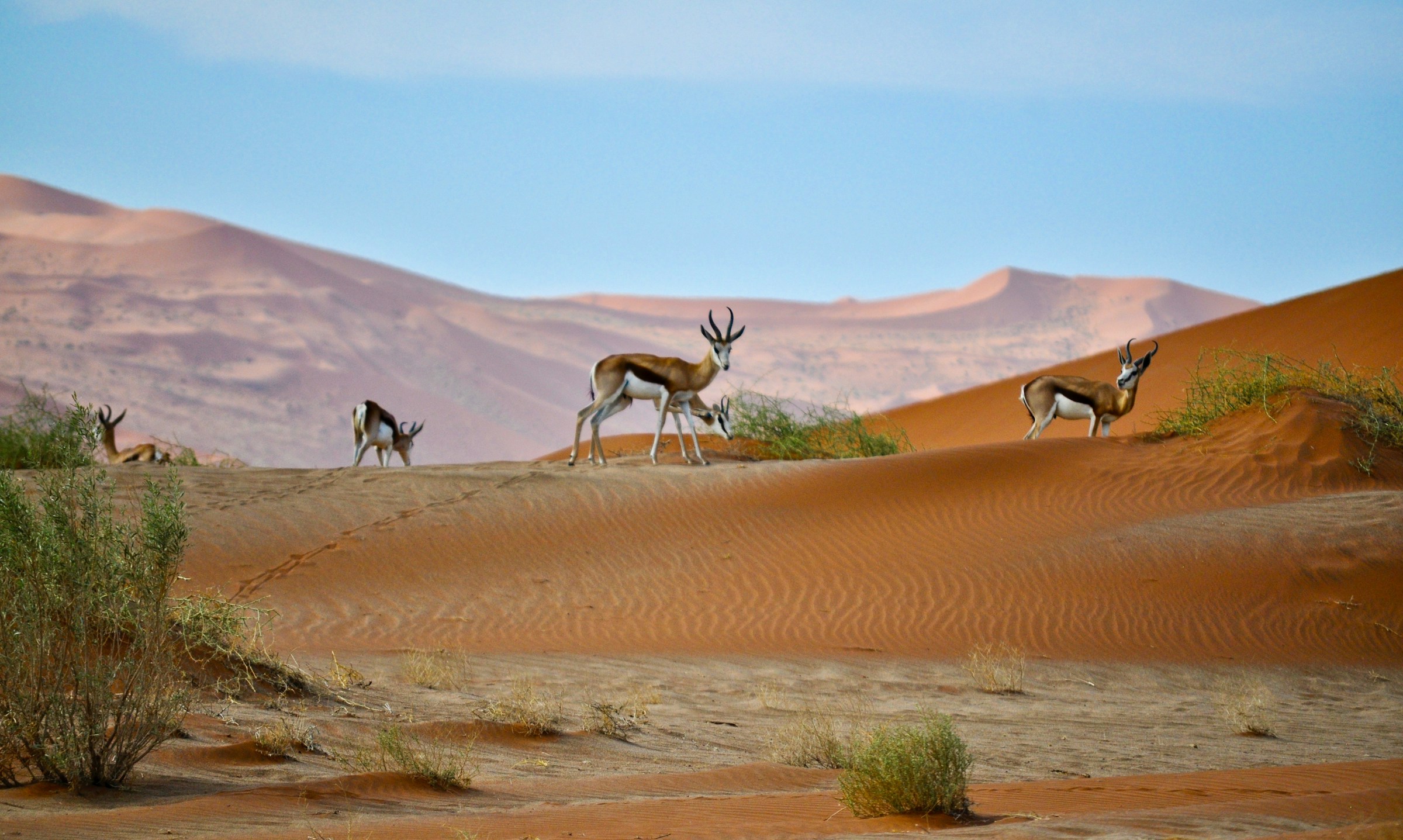
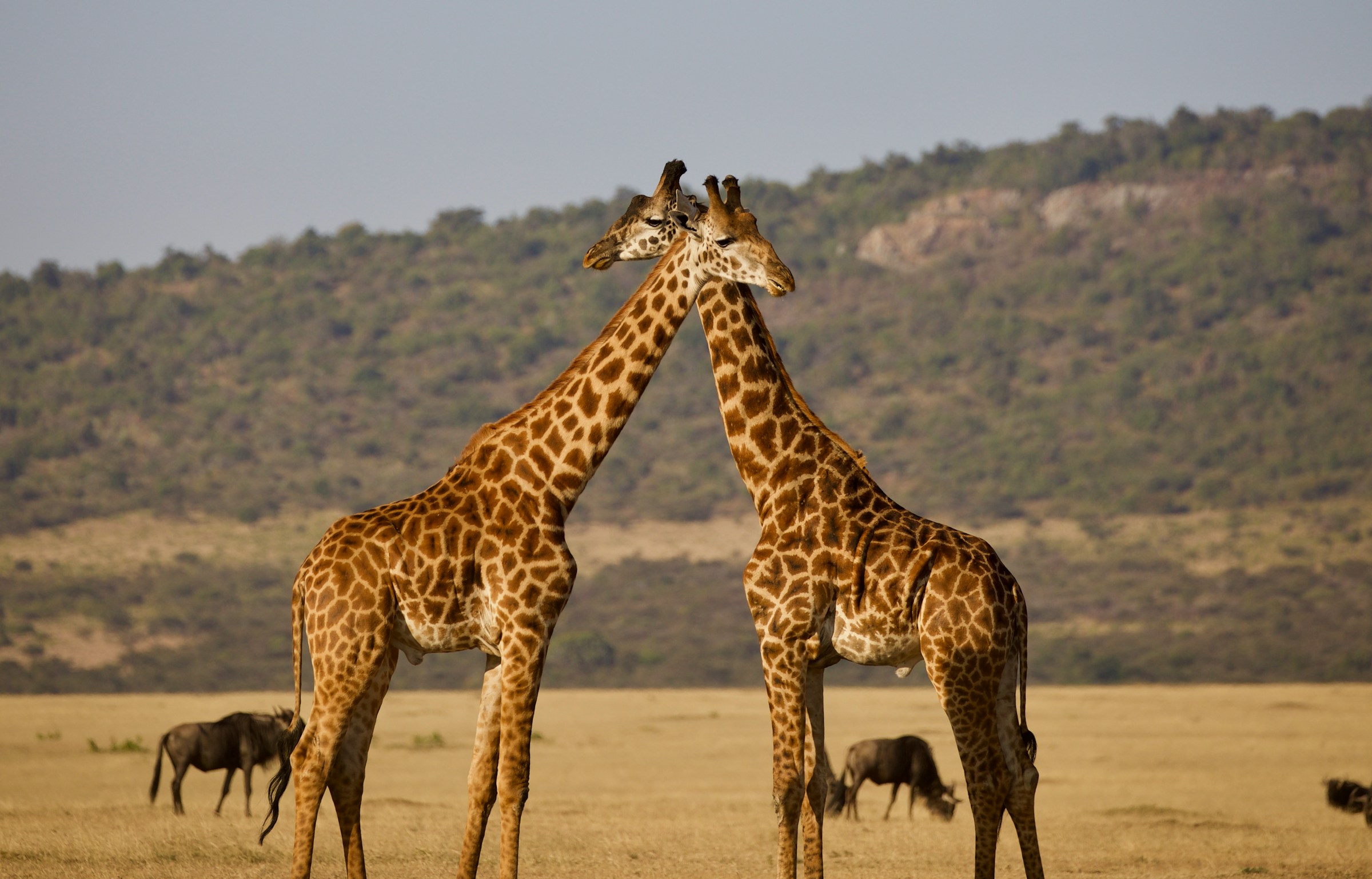
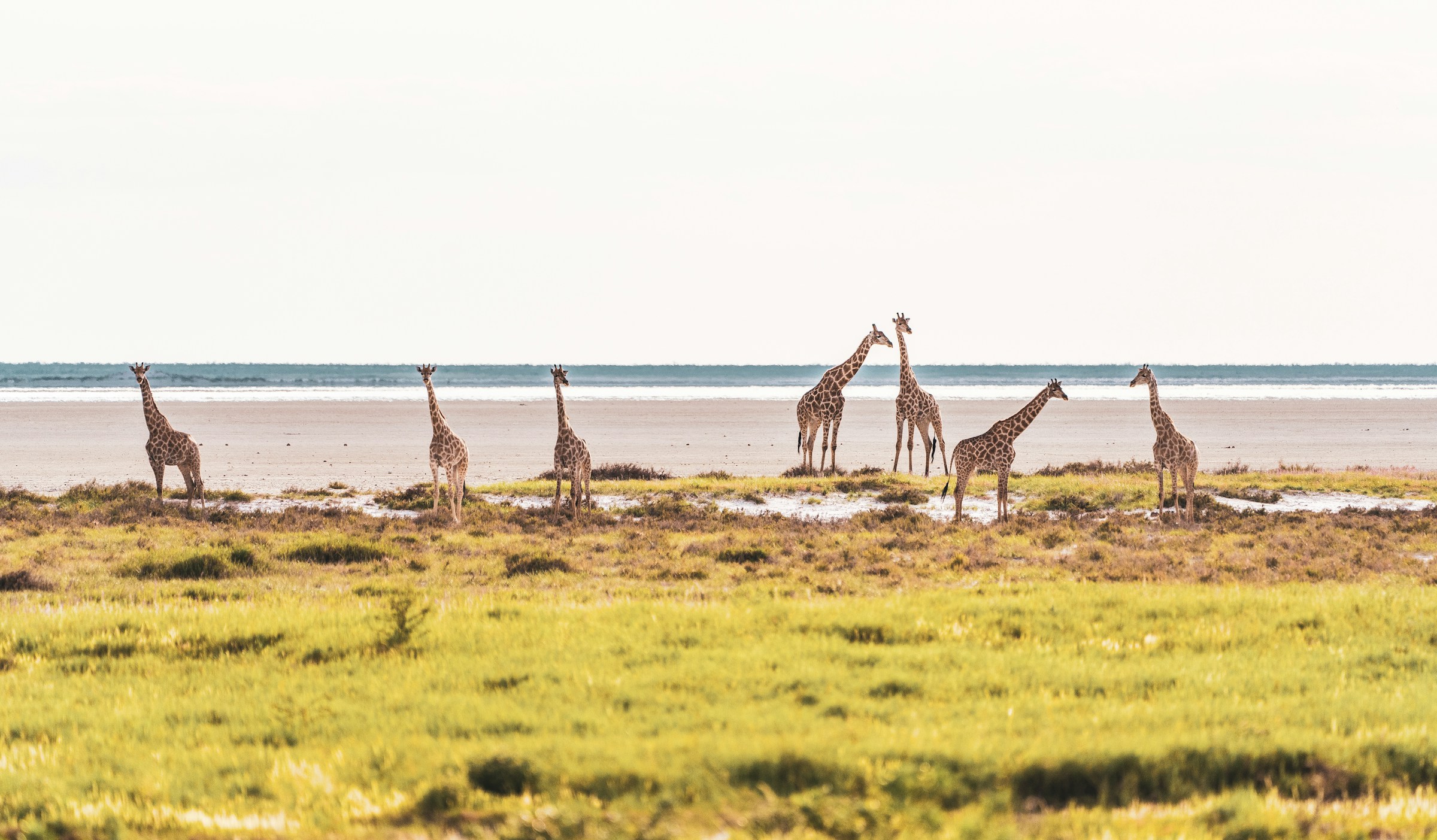
Wildlife is particularly abundant throughout the country. It is not uncommon to encounter zebras, oryx, or kudus along roads and tracks—even outside national parks. This constant proximity to wildlife is an integral part of the Namibian experience.
Namibia is bordered to the west by the Atlantic Ocean, whose cold waters teem with marine life. Fishing is therefore one of the country’s major economic resources, alongside mining, agriculture, and tourism. Natural resources, such as diamonds, uranium, and zinc, have also played a significant role in Namibia’s economic history.
Bordered by Angola, Zambia, and Zimbabwe to the north, Botswana to the east, and South Africa to the south, Namibia covers more than 825,000 km². Despite its vast size, it has a population of just over two million, making it one of the least densely populated countries in the world.
The Namibian population is a true cultural kaleidoscope. Numerous ethnic groups coexist, each having developed its own distinct identity, traditions, beliefs, and languages. Among them are the Ovambo, Kavango, Herero, Nama, Damara, Caprivi Strip peoples, Bushmen, Tswana, and Himba. These communities share a strong connection to their ancestral lands and a desire to live in harmony with nature.
A minority of white people, primarily from Afrikaner and German communities, as well as people of mixed race, complete this diverse population. The majority of the inhabitants are concentrated in the north of the country, particularly in the Ovamboland region, as well as in the major cities.
English is the official language, although many local dialects are widely spoken in more remote areas. Oshivambo remains the most widely spoken language. The national currency is the Namibian dollar, pegged to the South African rand.
Thanks to the quality of its tourist infrastructure, the country’s political stability, and the diverse experiences it offers, Namibia has established itself as a top destination in Southern Africa. It also serves as an excellent starting point for regional extensions, allowing travelers to combine their trip with other iconic destinations on the continent, such as Victoria Falls, Botswana’s national parks, South Africa, or the beaches of Mozambique.
Namibia enjoys a subtropical climate in the north and a desert climate in the south. Temperature variations can be significant depending on the season, with winter nights dropping to around freezing and summer days sometimes exceeding forty degrees Celsius.
Winter begins in May/June, temperatures cool down at the end of April, and can become quite cold at night from June onwards. With the colder weather, the climate dries out, and the last rainfall can occur as late as early May. Temperatures rise again in September with the arrival of spring and the flowering of the acacia trees. Daytime temperatures become more temperate to warm. The first light rains may appear in October, but significant rainfall doesn’t begin until November. Even then, it remains infrequent and sporadic; December can be very hot, especially if there is no rain. From January, February, and March onwards, rainfall helps moderate temperatures, and vegetation is lush (it’s still a desert environment; not a jungle, but all the trees are in leaf, and the contrast of desert colors is spectacular).
Summer is divided into two distinct periods. From October to December, the climate is hot and dry, while the rainy season, from January to April, brings heat and humidity, as well as lush and spectacular landscapes. Winter, from May to September, is cool and dry and is a particularly favorable time for wildlife viewing.
All seasons are suitable for travel. The dry season is ideal for safaris, while the rainy season reveals a more colorful and contrasting Namibia, offering a different perspective on the country.
Discover our guide « Best time to visit Namibia »
Specializing in Namibia and Southern Africa, Tourmaline Safaris designs tailor-made trips, meticulously planned down to the smallest detail. Thanks to in-depth local knowledge and a strong presence, each itinerary is adapted to your expectations, whether it’s your first trip to Africa or a more in-depth exploration of the country.
Personalized support, a rigorous selection of accommodations, and expert logistics ensure a worry-free journey, allowing you to fully appreciate Namibia’s rich natural and cultural heritage.
Discover our agency, our expertise or contact us
Pour tout savoir sur votre séjour et préparer vos vancances entoutes sérénité
Contactez-nous et obtenez un devis gratuit pour votre projet de voyage.
Ils nous ont fait confiance. Retrouvez les témoignages de nos clients.


